
Gaming database schemas
Players, progression and economies. Write volume is high and history matters more than it first appears — an item, a match result and a currency balance all need an audit trail. Every one opens in the free drawDB editor in a click, and is public domain.
5 schemas here, from 12 to 13 tables (64 tables and 576 columns in total), written for MySQL, PostgreSQL. Each one ships an ER diagram you can open and edit, a column-by-column reference, design notes explaining the trade-offs, and SQL for all six dialects. Recurring themes across the set: gaming, ranking.
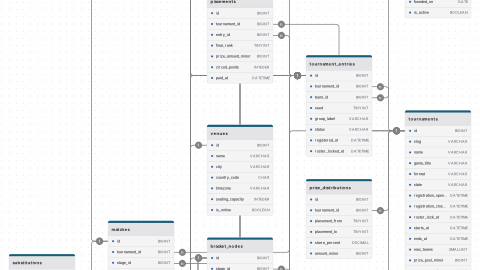

Esports tournament and bracket database schema
How a tournament platform models competition: single and double elimination, round robin and Swiss stages, teams with roster locks, a bracket stored as a node tree, best-of series with per-map results, venues and prize distribution.
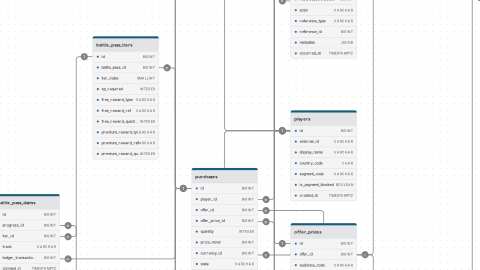

In-game economy and virtual currency database schema
How a game backend models virtual currency: hard and soft currencies, player wallets, an append-only double-entry ledger of every source and sink, a personalised item shop, validated store receipts, refunds and a battle pass.
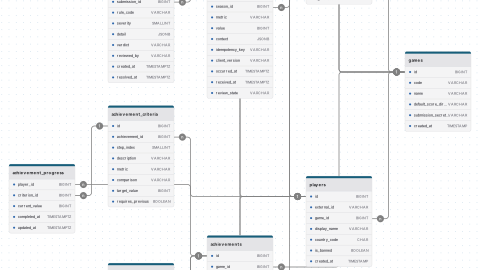
Game leaderboards and achievements database schema
How a game backend models progression: score submissions, leaderboards scoped global or regional or friends across daily and seasonal periods, rank derived rather than stored, multi-step achievements with progress, unlock rewards and anti-cheat flags.
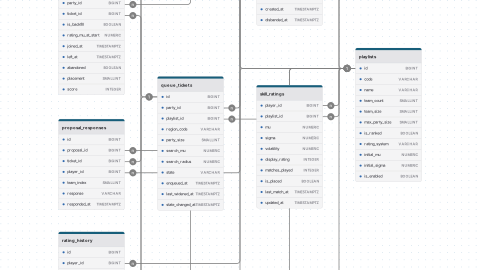
Multiplayer matchmaking database schema
How a competitive game backend matches players: skill ratings with uncertainty and full rating history, parties, regional queues, accept-or-decline proposals, server allocation, match rosters with backfill and abandonment penalties.
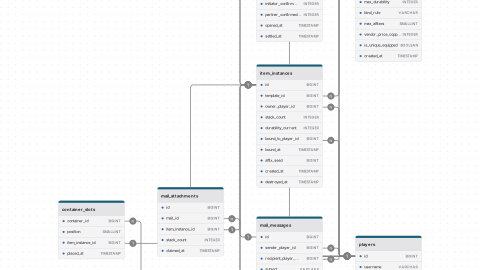
MMO game inventory and item database schema
How an online game models items: templates versus instances, stacking rules, affixes rolled per copy, bags and bank and equipped slots, soulbinding, durability, two-sided player trades, mail with attachments and an append-only item audit log.
Other schemas
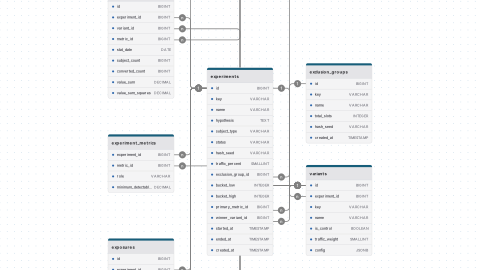
A/B testing & experimentation platform schema
An experimentation platform end to end: experiments and weighted variants, deterministic hash bucketing, exposure events, metric definitions, per-variant aggregates with sufficient statistics, significance results and staged rollout.
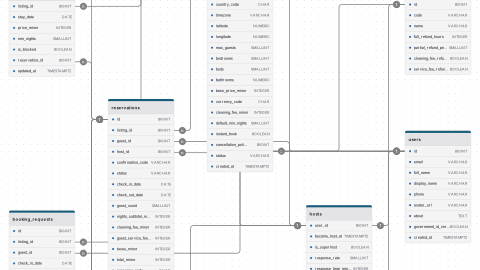
Airbnb database schema
How a short-term rental marketplace models its data: hosts and listings, a host-owned per-night calendar, request-to-book versus instant book, reservations, guest payments and host payouts, and two-way reviews that only reveal once both sides have written.
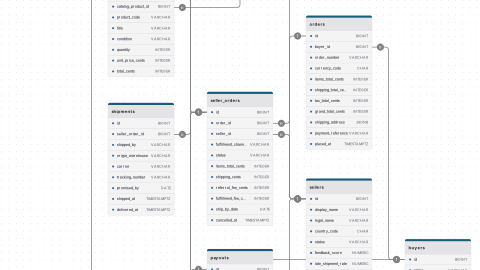
Amazon-style marketplace database schema
How a marketplace models many sellers listing the same product: a shared catalogue, competing offers, the buy box decision as a log, orders split into per-seller sub-orders, fulfilment, payouts and product-level reviews.
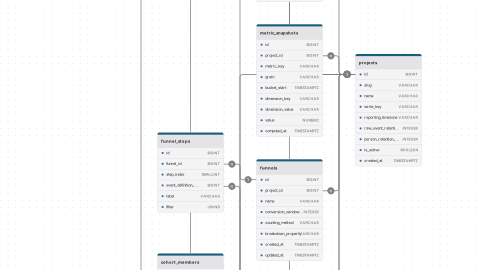
Product analytics platform database schema
How a product analytics service stores its data: projects and a discovered event registry, raw events with JSONB properties, anonymous and identified users with identity merges, sessions, funnels, cohorts, retention reports and precomputed metric snapshots.
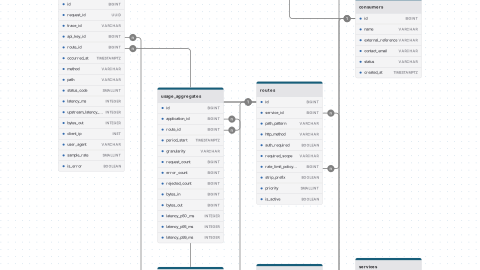
API gateway & rate limiting database schema
How an API platform is modelled: consumers and applications, hashed API keys with scopes and rotation, upstream services and routes, rate limit policies, durable usage counters, rolled-up aggregates, sampled request logs, plans, quotas and overage billing.
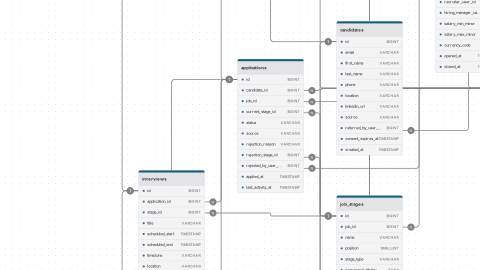
Applicant tracking & recruiting database schema
An ATS modelled end to end: jobs with openings and hiring teams, candidates separate from applications, per-job pipeline stages, interviews with panels, structured scorecards, offers with approval chains and a talent pool of near misses.
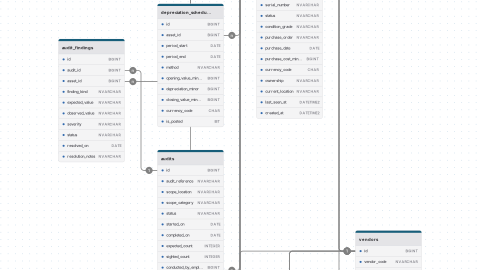

IT asset management database schema
How an IT estate is tracked end to end: models versus serialised assets, custody history, software licences and seat allocation with compliance counts, warranties and support contracts, maintenance, depreciation, audits and disposal.
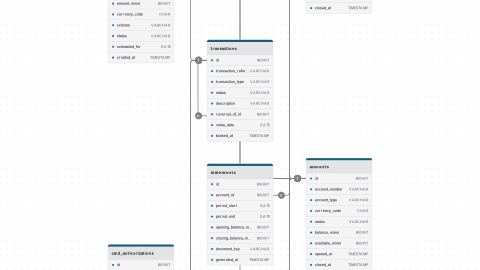
Banking ledger database schema (double-entry)
A double-entry bank ledger: accounts in a single currency each, balanced journal entries that are never updated, card authorizations that hold funds, transfers kept separate from postings, and frozen statements.
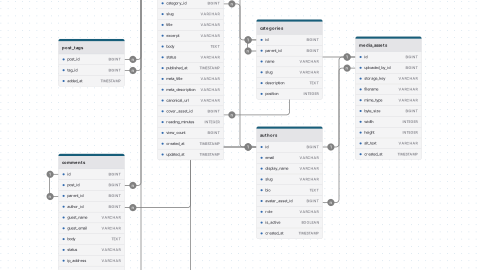
Blog & CMS database schema
A content management schema that survives contact with editors: posts with an append-only revision history, categories and tags, threaded comments, a real media library, slug redirects and a double opt-in newsletter list.