
Food & drink database schemas
Menus, orders and fulfilment under a clock. Prices and modifiers are snapshotted onto the order, because a receipt has to survive the next menu change. Every one opens in the free drawDB editor in a click, and is public domain.
4 schemas here, from 12 to 14 tables (52 tables and 473 columns in total), written for PostgreSQL, SQLite, MySQL. Each one ships an ER diagram you can open and edit, a column-by-column reference, design notes explaining the trade-offs, and SQL for all six dialects.
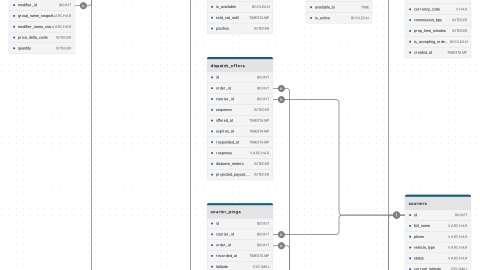

DoorDash food delivery database schema
How a food delivery marketplace models its data: restaurant menus built from reusable modifier groups, orders that snapshot every chosen option, courier dispatch offers, live location tracking, and the fee split between restaurant, courier and platform.
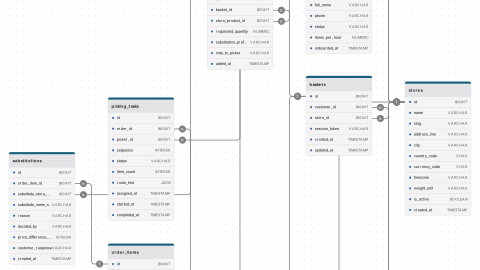
Online grocery delivery database schema
How an online supermarket models its data: per-store catalogue and pricing, weight-priced items billed on what was actually picked, baskets, substitution preferences and real substitutions, picking tasks, capacity-limited delivery windows and inventory counts.
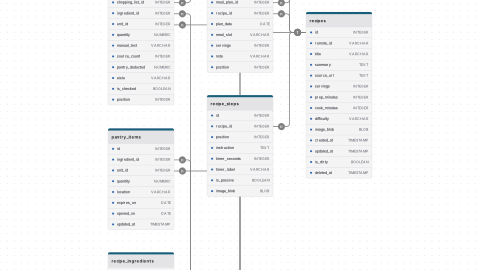

Recipe and meal planning app database schema
A local-first SQLite schema for a cooking app: recipes with quantified ingredients, units and ingredient-specific conversions, timed steps, meal plans by day, shopping lists that merge quantities across recipes, pantry stock and favourites.
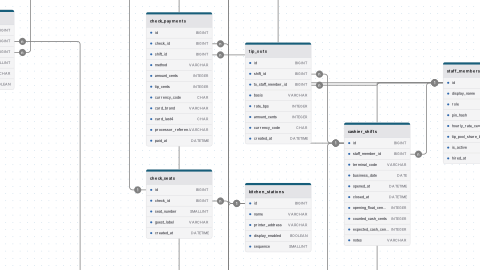

Restaurant point of sale database schema
How a dining-room POS models its data: floor plan tables and seats, open checks, courses and fire times, kitchen tickets routed per station, sold-out items, split checks, cashier shifts and tip-outs.
Other schemas
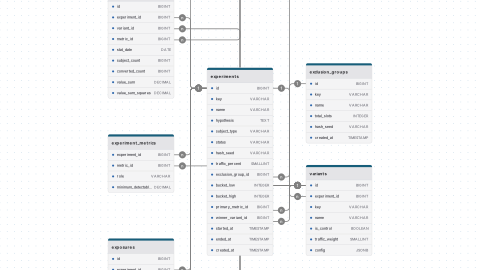
A/B testing & experimentation platform schema
An experimentation platform end to end: experiments and weighted variants, deterministic hash bucketing, exposure events, metric definitions, per-variant aggregates with sufficient statistics, significance results and staged rollout.
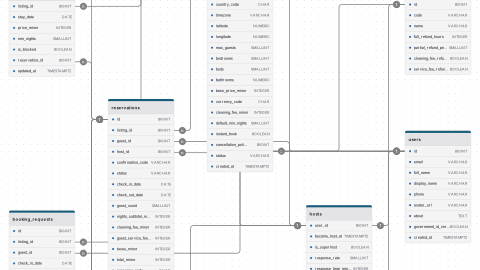
Airbnb database schema
How a short-term rental marketplace models its data: hosts and listings, a host-owned per-night calendar, request-to-book versus instant book, reservations, guest payments and host payouts, and two-way reviews that only reveal once both sides have written.
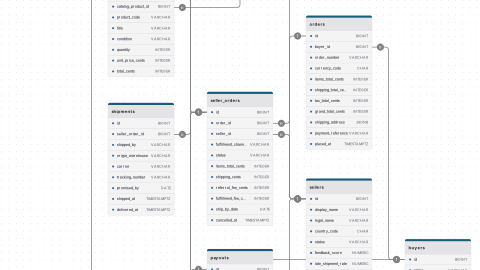
Amazon-style marketplace database schema
How a marketplace models many sellers listing the same product: a shared catalogue, competing offers, the buy box decision as a log, orders split into per-seller sub-orders, fulfilment, payouts and product-level reviews.
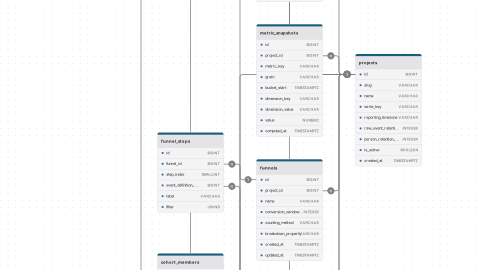
Product analytics platform database schema
How a product analytics service stores its data: projects and a discovered event registry, raw events with JSONB properties, anonymous and identified users with identity merges, sessions, funnels, cohorts, retention reports and precomputed metric snapshots.
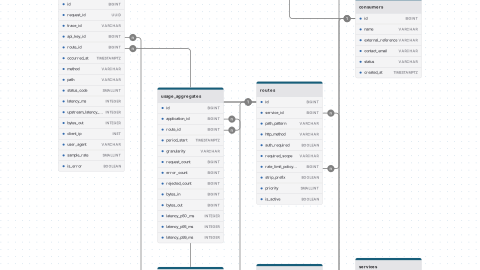
API gateway & rate limiting database schema
How an API platform is modelled: consumers and applications, hashed API keys with scopes and rotation, upstream services and routes, rate limit policies, durable usage counters, rolled-up aggregates, sampled request logs, plans, quotas and overage billing.
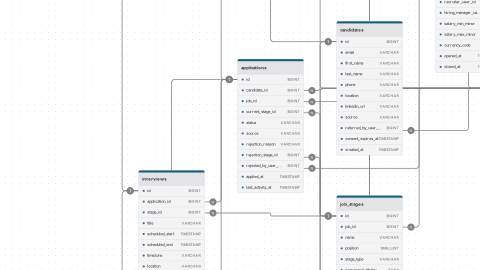
Applicant tracking & recruiting database schema
An ATS modelled end to end: jobs with openings and hiring teams, candidates separate from applications, per-job pipeline stages, interviews with panels, structured scorecards, offers with approval chains and a talent pool of near misses.
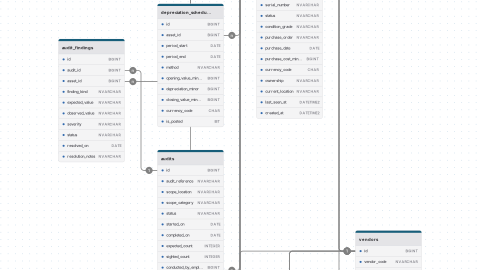

IT asset management database schema
How an IT estate is tracked end to end: models versus serialised assets, custody history, software licences and seat allocation with compliance counts, warranties and support contracts, maintenance, depreciation, audits and disposal.
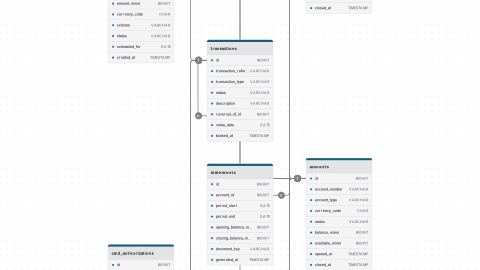
Banking ledger database schema (double-entry)
A double-entry bank ledger: accounts in a single currency each, balanced journal entries that are never updated, card authorizations that hold funds, transfers kept separate from postings, and frozen statements.
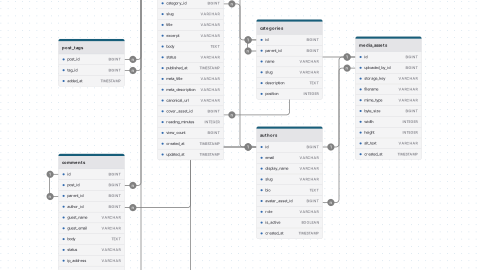
Blog & CMS database schema
A content management schema that survives contact with editors: posts with an append-only revision history, categories and tags, threaded comments, a real media library, slug redirects and a double opt-in newsletter list.