
Fintech database schemas
Money that has to be defensible in front of an auditor: balanced double-entry postings, integer minor units, corrections as new rows, and cached balances treated as an optimisation rather than the truth. Every one opens in the free drawDB editor in a click, and is public domain.
8 schemas here, from 10 to 13 tables (95 tables and 1056 columns in total), written for PostgreSQL, SQLite, MySQL, Oracle. Each one ships an ER diagram you can open and edit, a column-by-column reference, design notes explaining the trade-offs, and SQL for all six dialects. Recurring themes across the set: ledger, payments, wallets, trading.
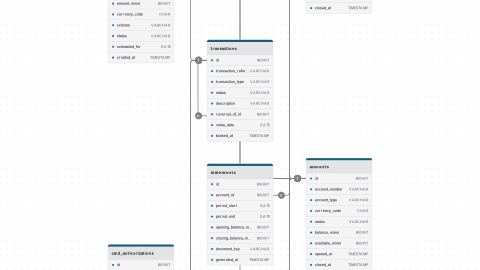

Banking ledger database schema (double-entry)
A double-entry bank ledger: accounts in a single currency each, balanced journal entries that are never updated, card authorizations that hold funds, transfers kept separate from postings, and frozen statements.
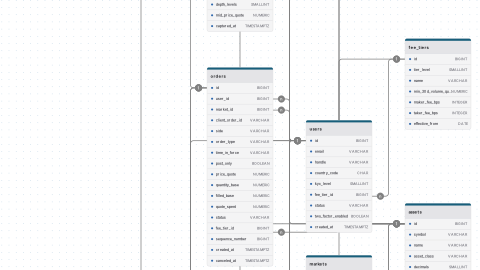
Crypto exchange order book database schema
How a centralised crypto exchange models its data: trading pairs, limit orders resting on the book, maker and taker trades, available versus locked balances, on-chain deposits and withdrawals, fee tiers and order book snapshots.
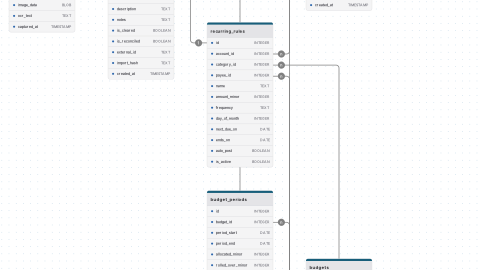

Expense tracker & personal finance database schema
A local-first SQLite personal finance database: accounts, transactions in integer minor units, a nested category tree, per-period budgets with rollover, recurring rules, statement imports with auto-categorisation, receipts, and transfers modelled as a linked pair of legs.
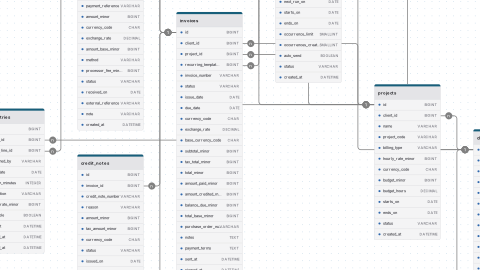

Freelance invoicing and billing database schema
How a freelance and small-business invoicing app models its data in MySQL: clients and projects, tracked time, invoices with per-line tax, partial payments, credit notes, recurring templates, reminder schedules and multi-currency with the rate snapshotted at issue.
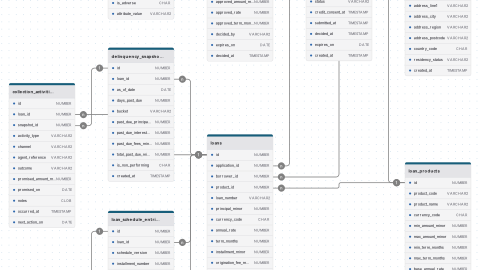

Consumer lending and loan servicing database schema
How a consumer lender models its data in Oracle: applications and verified income, credit decisions with ranked adverse-action reasons, loans, the amortisation schedule as rows, repayments allocated across fees, interest and principal, delinquency buckets and collections.
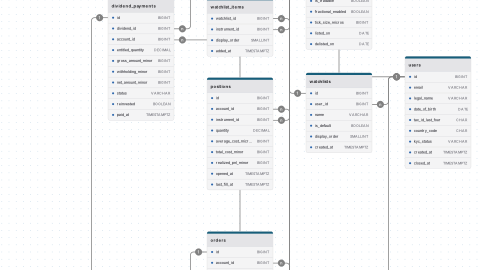
Robinhood-style stock trading database schema
How a retail brokerage models its data: accounts and instruments, orders with type and time-in-force, partial fills, positions derived from executions with average cost basis, cash settlement, dividends, watchlists and price alerts.
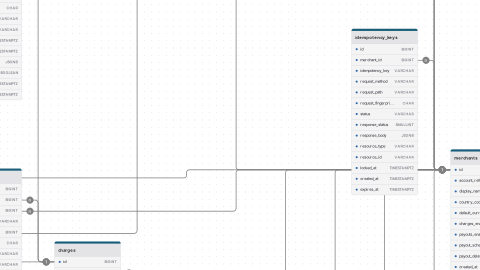
Stripe-style payments platform database schema
How a payment processor models its data: merchant accounts, tokenised payment methods, the payment intent state machine, charges and partial refunds, chargebacks with evidence deadlines, payouts, webhook deliveries and idempotency keys.
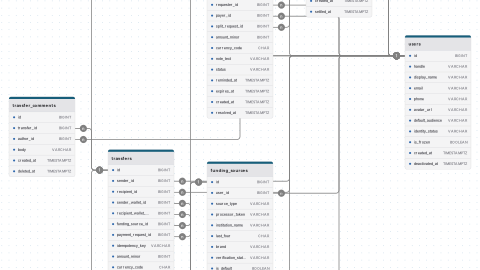
Venmo-style peer-to-peer payments database schema
How a social payments app models its data: wallets and balances, linked bank accounts and cards, transfers between friends, payment requests, bill splits, per-payment privacy, and the feed with comments and likes.