
Tinder dating app database schema
How a dating app models its data: profiles with ordered photos, discovery preferences, an append-only swipe log, matches created only on a mutual right swipe, messaging scoped to a match, blocks and reports, and consumable boosts and super likes.
Tinder ER diagram
Related database schemas
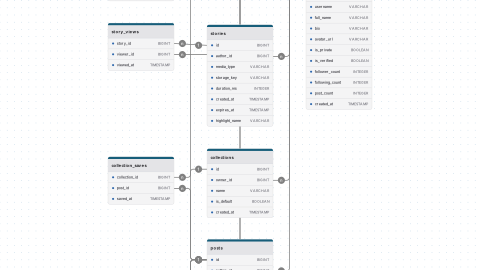

Instagram database schema
How a photo-sharing app models its data: asymmetric follows with pending requests for private accounts, posts carrying an ordered carousel of media, likes and two-level comments, stories that expire, saved collections and direct messages.
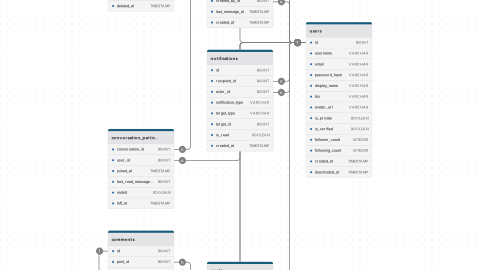
Social network database schema
Followers, feeds and direct messages modelled for read volume: asymmetric follows, one posts table for replies and reposts, narrow like rows, per-participant read pointers and notifications.
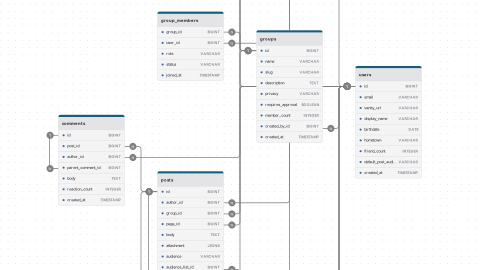
Facebook database schema
How a social network models its data: symmetric friendships stored as one canonical row, posts with audience scoping, typed reactions, groups with membership roles, pages, and events with RSVPs.
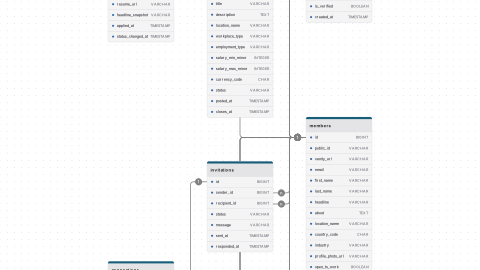
LinkedIn database schema
How a professional network models its data: profiles with a date-ranged career history, symmetric connections created from invitations, canonical skills with endorsements, company pages, job postings and applications, and a feed.