
Last-mile delivery & route planning database schema
Delivery operations modelled properly: depots, drivers and shifts, vehicle capacity constraints, orders with time windows, routes planned per day, stops in planned and actual sequence, geofenced arrivals, failed attempts, proof of delivery and re-sequencing history.
Last Mile Delivery ER diagram
Related database schemas
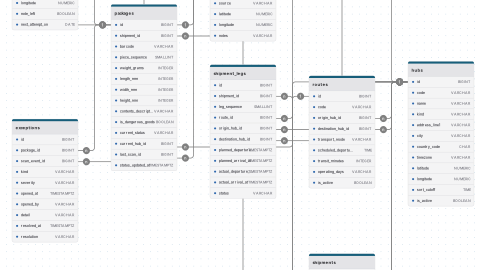

Parcel tracking and courier network schema
A courier network schema built on an append-only scan log: shipments and the packages inside them, hubs and planned routes, scan events as the only truth, derived status, delivery attempts, exceptions, proof of delivery, and promised versus actual delivery.
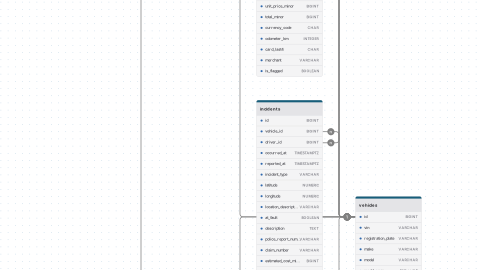
Vehicle fleet management database schema
How a vehicle fleet is modelled: vehicles and drivers, licence entitlements with expiry, assignment history, downsampled telematics and fault codes, maintenance due by mileage or date, work orders and parts, fuel, inspections and incidents.
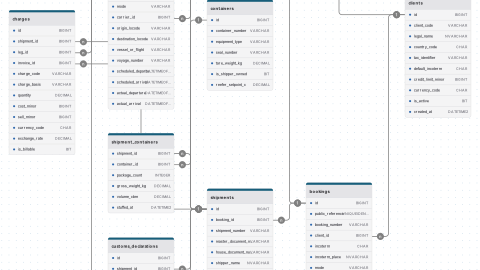
International freight forwarding database schema
A SQL Server schema for international freight: bookings and incoterms, shipments and container consolidation, multi-leg sea, air and road journeys, carrier rate contracts, customs declarations, milestone events, documents, charges and invoicing.
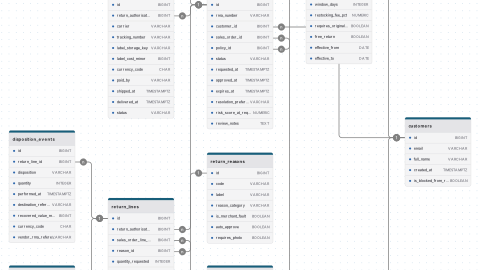
Returns & RMA (reverse logistics) database schema
How returns are actually modelled: RMA authorisations and eligibility windows, versioned policies, return reasons, inbound inspection and grading, dispositions from restock to scrap, refunds against exchanges and store credit, labels, restocking fees and return-abuse signals.